| Shoe | New Balance Fresh Foam X 1080 v15 · $170 |
| Weight | 9.2 oz / 261g (men's size 12.5) |
| Stack / Drop | ~39.9mm heel · ~33.9mm forefoot · 6mm drop (stack is approximate per NB) |
| Foam | Infinion supercritical nitrogen-infused Fresh Foam X |
| Insole | Currex RunPro High Profile, for high-arch feet |
| Miles Logged | 46 miles and counting |
This is my first time in the 1080 and I am impressed. It is soft, lighter than expected, and holds up on longer runs. The stock insole is flat. If you have high arches, swap it out for the Currex RunPro High Profile. The two together are a great daily training combo for wide, high-arch feet. 46 miles in and no complaints.
My feet are hard to fit. I run in a 2E wide, have a tall instep, and high arches. Most shoes feel fine in the store but cause problems on longer runs. I decided to try the New Balance 1080 v15 for the first time and added Currex RunPro High Profile insoles from day one. I have 46 miles on this combo. Here is what I found.
The Shoe: New Balance Fresh Foam X 1080 v15
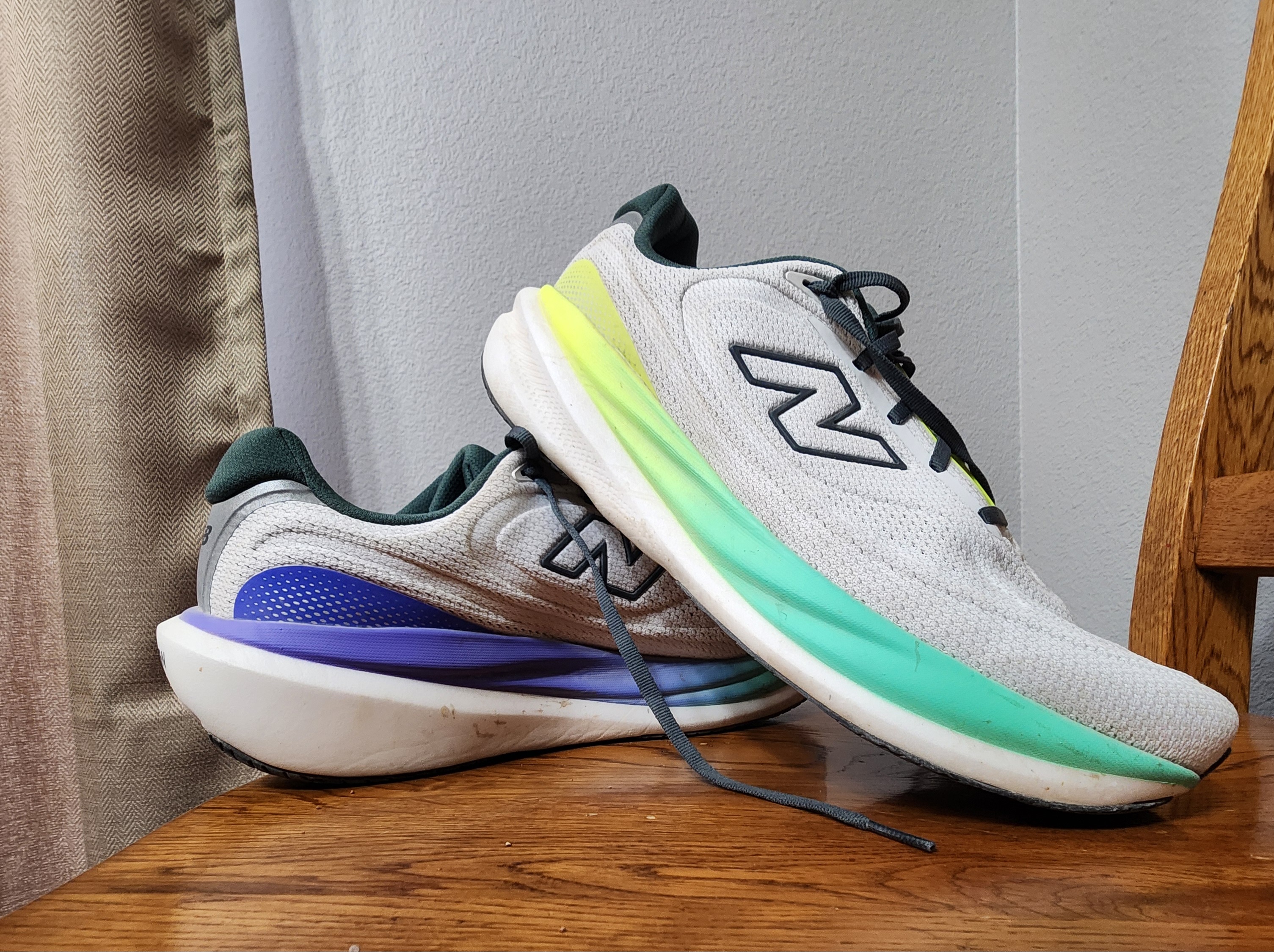
The 1080 is known for being plush and reliable. The v15 is the first version to use Infinion foam, a new process where New Balance injects nitrogen into the foam to make it softer and lighter. In a size 12.5, it weighs 9.2 oz. That is pretty light for a shoe with this much cushion.
My first run surprised me. I expected it to feel slow and mushy. It didn't. The shoe rolls forward smoothly, and the foam pushes back when you land. I never felt like I was fighting it to keep my pace.
Fit for Wide, Tall Feet
I ordered the 2E wide version. The toe box had plenty of room. No squeezing, no pressure on the sides. The upper stretches a bit, which helps when your feet swell on long runs. The heel holds steady with no slipping.
The stock insole that comes with the shoe is very flat. That is fine if you have a neutral foot. But if you have high arches, the shoe will feel like it is missing something. The insoles fix that.
The Insoles: Currex RunPro High Profile

Currex makes insoles in three arch heights: Low, Medium, and High. The High Profile has a deep heel cup that holds your foot in place, and a firm arch column that fills the gap under a high arch. The top layer is still cushioned, so it doesn't feel stiff or rigid.
If you have high arches, you have a few options. Custom orthotics are made by a podiatrist and shaped exactly to your foot. They work well but can cost $300–600, require an appointment, and usually don't move easily between shoes. Over-the-counter insoles like the Currex are much cheaper and work in any shoe. They won't replace a custom orthotic if you have a serious foot problem, but for most high-arch runners they are a great starting point.
Fit Inside the 1080
Swapping out the stock insole took about 30 seconds. I use the XL size, which fit the 12.5 with no trimming needed. Depending on your shoe size and brand, you may need to trim a small amount from the toe. Currex scores the insole so it cuts cleanly. In the 2E upper, the insole sat flat with no bunching. The arch support hit the right spot from the very first run.
46 Miles Together
46 miles isn't enough to judge long-term durability, but it is enough to know if a setup works. For me, it works.
My feet feel good after runs. Not "good for the distance." Just good. My arches don't ache. The bottom of my feet don't feel beat up. The insole handles the arch, the foam handles the impact, and the two work well together.
The shoe feels lighter than I expected from something this cushy. Easy runs feel effortless. I have also done threshold work in them without any issues. The foam has enough response to handle a faster pace. They are not a race shoe, but they hold up to harder efforts just fine.
One note on sizing: if you have wide feet, order the 2E. Adding the Currex insole takes up a bit of volume inside the shoe. In the 2E the fit is snug but comfortable. In a standard-width shoe it might feel tight.
Which profile do I need? The Currex RunPro comes in Low, Medium, and High. Stand barefoot. If you can clearly see a gap under your arch, get the High. If your arch barely lifts off the floor, get Low. Not sure? Get Medium. It works for most people.
Who This Setup Is For
This combo works best for runners who:
- Have wide (2E or wider), tall, or high-arch feet
- Need a comfortable shoe for easy runs and long runs
- Want a lot of cushion without a heavy shoe
- Get sore feet or tired arches on runs over 10 miles
This is not a trail shoe or a race shoe. It is a daily trainer. The insoles are what made it work for my feet. If you have high arches and have never tried aftermarket insoles, this is a good place to start.
Training for an ultra? The Iron Miles Training Planner builds a free personalized training plan around your current fitness. Upload your Garmin data for a plan calibrated to your VO₂ max and weekly mileage.
Keep Reading
Ready to build your training plan?
Answer a few questions about your fitness and goal race. Get a week-by-week plan in minutes.
Build My Plan