
| #1: Best Overall | Garmin Fenix 9 · from $999.99 · 30hr GPS (47mm) · AMOLED |
| #2: Best Garmin for Ultras | Garmin Enduro 4 · $899.99 · 80hr GPS (144hr with solar) · 66g |
| #3: Best Value | Coros Vertix 2S · $699 · 118hr GPS · 89g · Solar |
Battery figures are the maker's estimates in normal GPS mode. Solar figures assume lots of sun. Each model comes in several sizes and price tiers, so check the version before buying.
If you want the latest Garmin hardware and the best screen, get the Fenix 9. If you want a light Garmin built for long races, get the Enduro 4. If the Garmin prices are hard to swallow, the Coros Vertix 2S still lasts 118 hours and costs much less.
Most watch decisions come down to one question: how long will you be out there? A 5K runner can use almost anything. A 100-miler cannot. Once you're running through the night or across multiple days, battery life becomes a real concern. That's where these three watches stand out.
Each of these watches comes in multiple versions: different case sizes, display types, band materials, and price tiers. The models covered here are specific configs. When you click through, check the variants. The right one for your wrist and budget may differ from the flagship.
#1: Garmin Fenix 9

The Fenix 9 launched August 25, 2026 as Garmin's new flagship. The base model starts at $999.99. Garmin says its AMOLED screen is twice as bright as the Fenix 8's, and it has 64GB of storage, twice as much room for maps. The 47mm size gets about 30 hours of GPS. The 51mm size gets about 54 hours and costs $1,099.99.
The training platform is the same deep Garmin Connect ecosystem: VO₂ max, training readiness, HRV status, race predictor, suggested workouts, sleep tracking. If you want two-way satellite texting for remote mountain races, you need the Fenix 9 Pro. The base model doesn't have it.
Fenix 9 Variants: Know What You're Buying
The Fenix 9 comes in 43mm, 47mm, and 51mm sizes. The base model ($999.99) has no solar and no inReach. The Fenix 9 Pro starts at $1,099.99 and adds inReach on every size, and some Pro models add solar. Read the listing closely before you buy, because the names look alike. For a 100-miler that will take you more than 30 hours, pick the 51mm or look at the Enduro 4.
Solar charging: what to expect. On the Fenix 9, only some Pro models have solar. The Enduro 4 and Vertix 2S have it too. Solar won't replace a full charge, but it adds hours on a sunny day. Think of it as a buffer. It helps most on long, slow daylight miles above treeline. At night it does nothing.
#2: Garmin Enduro 4

The Enduro 4 came out October 6, 2026 and replaces the Enduro 3. It is Garmin's watch for ultras. Garmin rates it at 80 hours of normal GPS, or 144 hours with lots of sun. Its battery saver mode lasts even longer. It weighs 66 grams. It uses the same Garmin Connect training tools as the Fenix 9, and it has 64GB of storage for maps.
At $899.99 it costs $100 less than the base Fenix 9. It trades the AMOLED display for a MIP screen. MIP looks duller indoors, but it uses less power and is easy to read in bright sun. If you want a light Garmin with lots of battery, this is it.
Should You Still Buy the Enduro 3?
Stores may cut the Enduro 3's price now that the Enduro 4 is out. It is still a strong ultra watch. If you find it on a deep sale, it's a good buy.
#3: Coros Vertix 2S
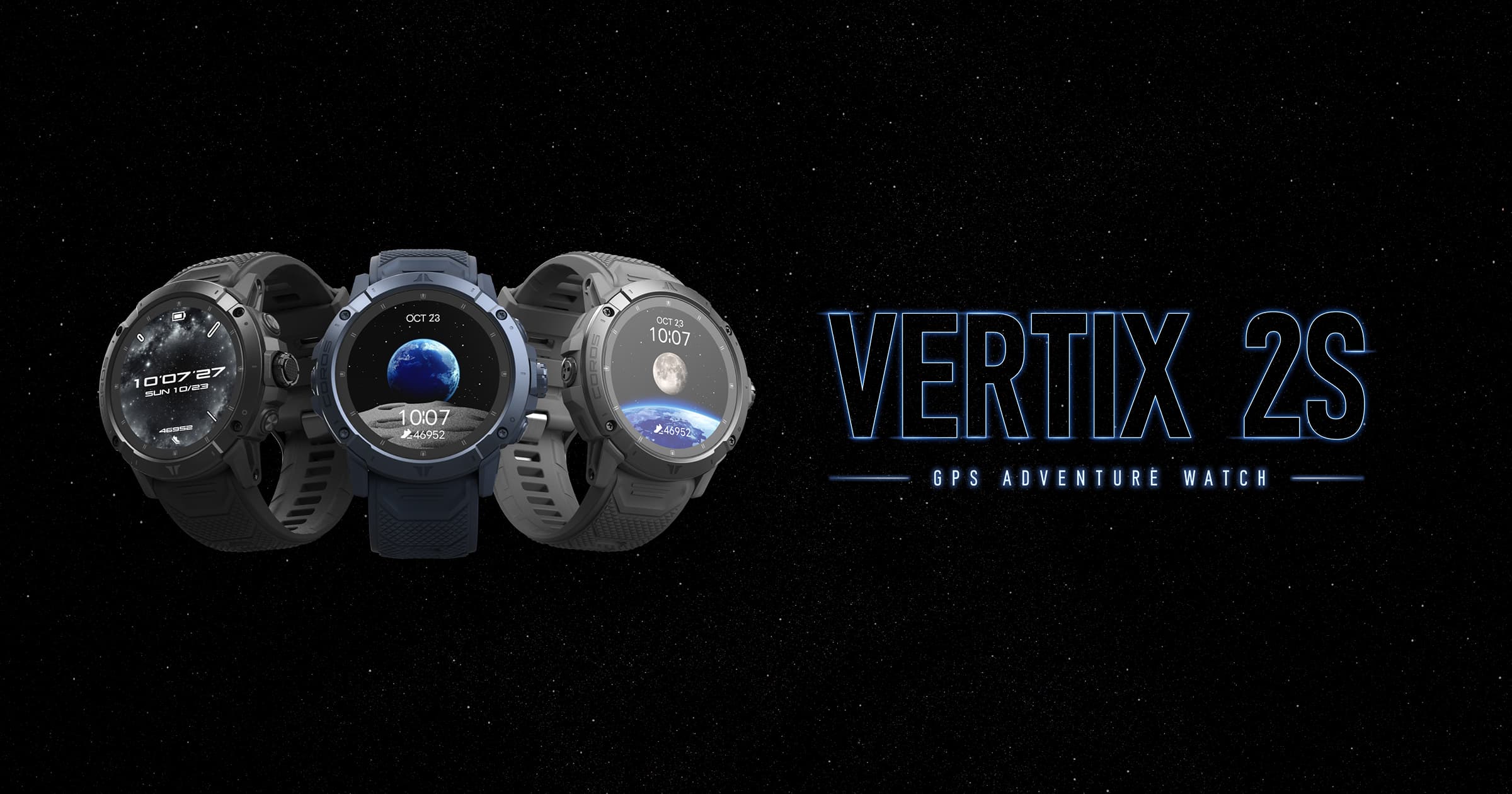
118 hours of GPS for $699. For a 20 to 30 hour 100-miler, that's more than you need. But for multi-day races, or if you never want to think about battery, 118 hours gives you real margin.
The price matters too. At $699, it's $200 less than the Enduro 4 and $300 less than the base Fenix 9. Coros's training platform covers the core metrics well: training load, recovery time, VO₂ max, pace zones, elevation. If you're not already in the Garmin ecosystem, you won't miss what it lacks.
Vertix 2S Variants
The Vertix 2S comes in Black Midnight and White Midnight. It ships with a titanium buckle band plus a silicone band. One case size: 50mm. It wears large, so worth trying on if you have smaller wrists. The Coros Apex 2 Pro is a smaller option, though battery life is shorter.
Spring 2026 firmware adds meaningful race tools. COROS pushed a significant update in early 2026 available on all COROS hardware since 2022. The headline feature is terrain-adjusted Race Pace Strategy, which now accounts for gradient when projecting your finish time and pacing bands, useful for 100-mile courses with major elevation swings. Hill Alerts work similarly to Garmin's ClimbPro, giving you real-time climb and descent guidance during a race. A Hybrid Fitness mode was also added for athletes mixing strength and endurance training. If you already own a Vertix 2S, these arrive as a free update.
Heart Rate Accuracy: What Your Watch Actually Measures
Every watch here uses optical wrist heart rate. For easy runs and general zones, it works fine. For hard efforts above threshold, it can lag or drift. The sensor reads blood flow through your wrist skin and has to filter out movement from arm swing. At high intensity, that's a real problem.
This matters more for training than for racing. If you use HR to track VO₂ max trends or set zone 2 targets over months, small errors add up. A 5 BPM error on one zone 2 run looks minor. Repeated across a training block, it can shift your zones the wrong way.
The Armband Option
The fix is an optical armband sensor. Worn on the upper arm, it reads from a larger, steadier blood vessel with less motion noise. Our pick is the Coros Heart Rate Armband ($79). It pairs with both Coros and Garmin watches via ANT+, includes auto-wear detection, and is consistently more accurate than wrist HR at hard efforts. Good for threshold work and VO₂ max intervals. If heart rate drives your training decisions, an armband is worth adding regardless of which watch you buy.
Chest straps vs. armbands: Chest straps (Garmin HRM-Pro, Polar H10) are the most accurate option. They read electrical activity, not light. The tradeoff is comfort on long runs and fit issues that cause signal loss. Armbands land between wrist HR and chest straps: more accurate than the wrist, more comfortable than a strap. Either one beats the watch alone for hard training sessions.
Which One Should You Buy
The decision comes down to ecosystem and budget. If you're already using Garmin Connect, stay in it. The Fenix 9 is the right pick if you want the current flagship, with the brightest screen and the full training suite. If you need inReach, buy the Fenix 9 Pro. If battery matters most, the Enduro 4 lasts far longer and costs $100 less than the base Fenix 9.
Starting fresh or hitting a budget wall? The Vertix 2S is a strong watch, not a compromise. The battery advantage is real. Coros covers what most runners need. And at $699, the savings can go toward entry fees.
- Current flagship, best screen: Garmin Fenix 9 (Fenix 9 Pro for inReach)
- Long battery, light, full Garmin tools: Garmin Enduro 4
- Long battery, best value: Coros Vertix 2S
- For clean HR training data: add the Coros Heart Rate Armband · $79 to any of the above
Using your watch with Iron Miles: The Iron Miles Training Planner takes Garmin Connect exports. Upload your data and it uses your VO₂ max, HR zones, and weekly mileage to build a training plan around your current fitness.
Keep Reading
Ready to build your training plan?
Answer a few questions about your fitness and goal race. Get a week-by-week plan in minutes.
Build My Plan